
Start with what the material is not
Spray foam is not a defective product in general terms. It performs well thermally, and in the right application, correctly specified and correctly installed, it does the job it is sold to do.
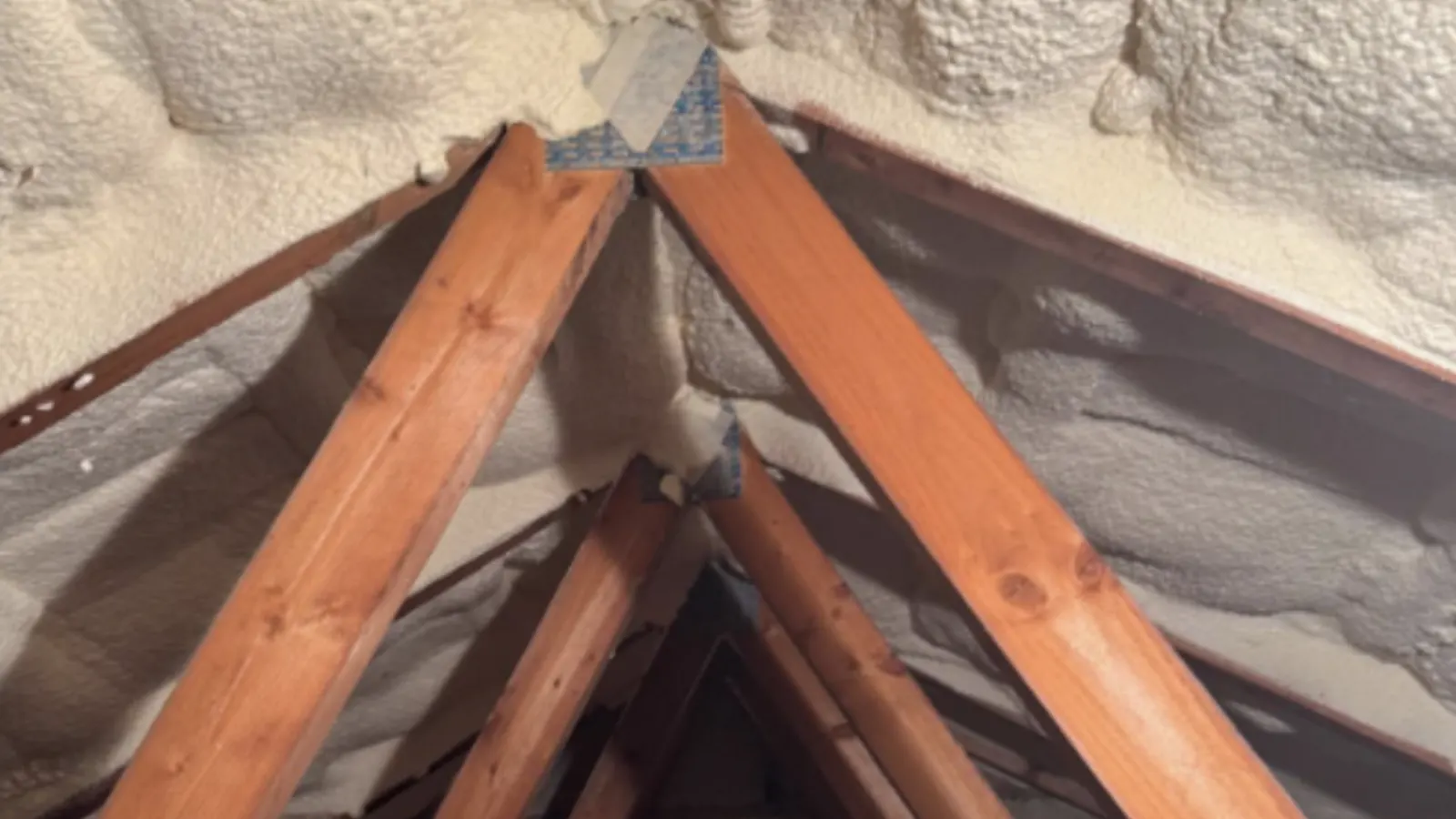
Almost every problem below comes from one specific use: foam sprayed onto the underside of an existing pitched roof in a house that was never designed for it. That is the situation most UK homeowners are in, and it is worth separating the material from the application.
This is the distinction the industry bodies draw too. RICS issued guidance in 2022 warning that spray foam in a roof can trap moisture, contribute to timber decay and mask structural defects from inspection. The objection is to what it does in that setting, not to the material as such.
Problem one: the ventilation the roof relied on
A traditional UK pitched roof is a cold roof. Air enters at the eaves, moves through the roof space and leaves at the ridge, carrying moisture with it. That airflow is not incidental, it is how the timbers stay dry.
Foam applied to the underside of the covering closes that path. The moisture still arrives from the house below, but it now has nowhere to go. Our guide to loft condensation covers how the intended system works and what happens when it stops.
Problem two: you cannot see the roof any more
This is the problem that turns the others into a transaction issue. Once foam covers the rafters, battens and underlay, nobody can inspect them. Not you, not a surveyor, not a lender's valuer.
The objection is rarely to the insulation. It is to the fact that the condition of the roof structure has become unverifiable, and an unverifiable roof is treated as a risk.
This is why the same house can be fine one year and difficult the next, without anything physically changing.
Problem three: what it does to the timbers
Where moisture is trapped against timber that cannot dry, decay becomes possible over time. It is not automatic, and plenty of roofs are found to be sound when the foam comes off. But the risk is real, and it is invisible while the foam is in place. Our guide to spray foam and roof timbers covers what actually happens and how it is assessed.
Problem four: removal is harder than installation
Foam is quick to apply and slow to take off. Closed cell foam sprayed directly onto the underlay or the covering bonds hard, and separating it cleanly is often not possible, which means part of the roof has to be re-covered. This is the single biggest reason removal quotes vary so widely, as our guide to removal cost explains, and the difference between the two foam types is covered in open cell versus closed cell.
Problem five: how it was sold
A significant share of UK installations were sold door to door or through cold calling, frequently alongside claims about energy savings and sometimes tied to funding schemes. Documentation was often thin or absent, which matters later, because a surveyor asking what was installed and to what specification frequently finds there is no answer on record.
Which problems are overstated
Two things get repeated that deserve qualification.
- "Spray foam always rots the roof." It does not. It creates conditions where decay is possible and inspection is impossible. Those are different claims, and the second one is the one that causes trouble.
- "No lender will touch it." Not accurate. The House of Commons Library briefing on spray foam and mortgages records that of the 20 largest mortgage providers, seven refuse to lend on any property with any form of spray foam, and the other 13 consider it case by case, with extra information and surveys likely to be required. The common position is caution and paperwork, not refusal. Policies also change over time, and nobody can promise a particular outcome either way.
What to do if you have it
If you are not selling or remortgaging and the roof is dry and ventilated, you may have no urgent problem. If a sale, a purchase or a remortgage is in view, the useful step is finding out what you actually have: which foam type, how it was applied, and whether the timbers behind it are sound.
Our guides to spray foam and mortgages and spray foam and surveys cover each side of that, and our spray foam removal service covers removal, timber inspection and repair, re-insulation and the documentation pack, nationwide.