
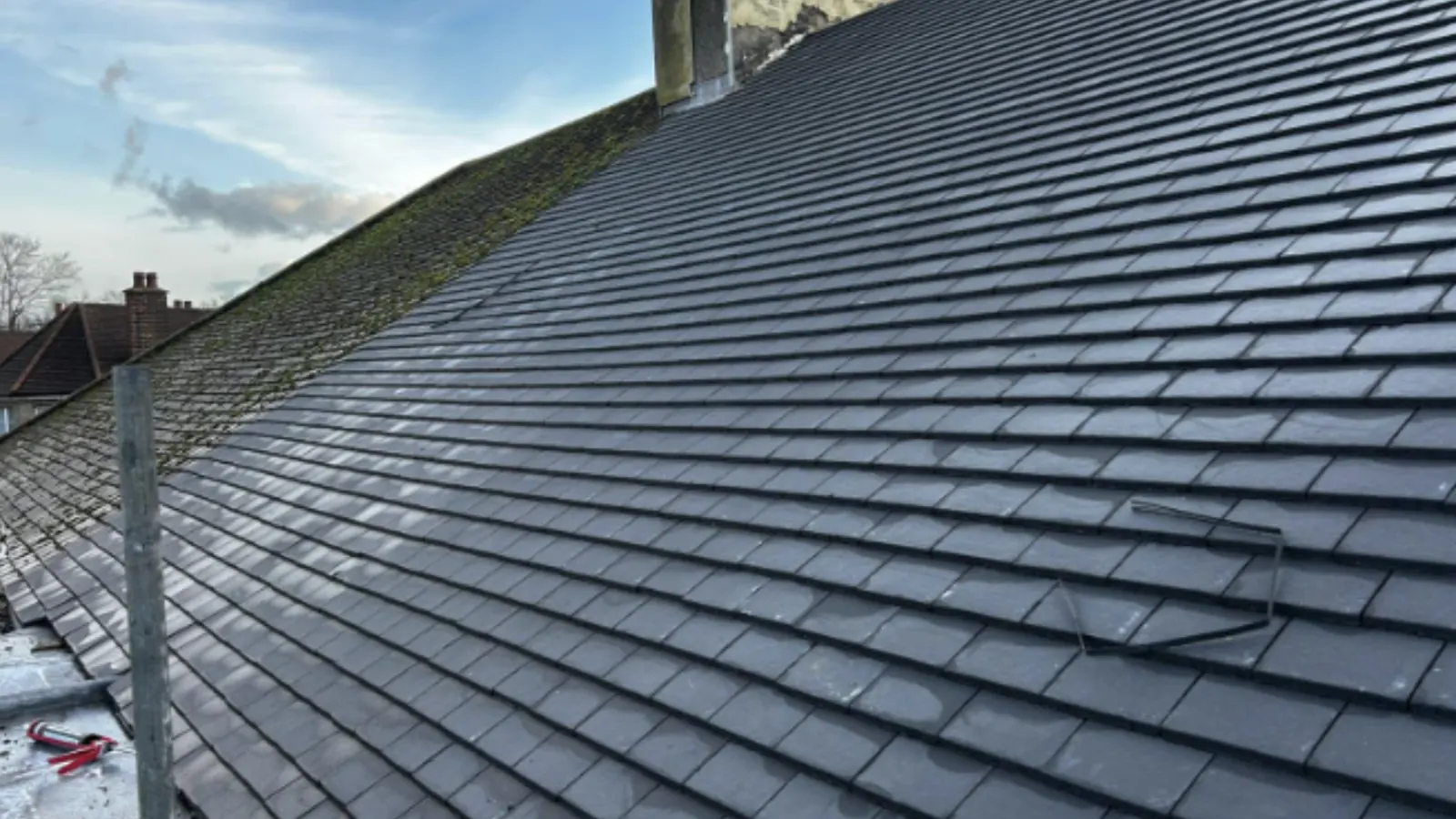
What you can see from the ground
Standing across the road from your house with a pair of binoculars will tell you more than most people expect. Look for:
- Slipped, cracked or missing tiles or slates, especially in groups rather than one-offs
- A ridge line that dips or waves rather than running straight
- Vegetation and heavy moss growth, which holds water against the covering
- Daylight visible through the roof from inside, which is unambiguous
- Damaged or missing mortar at the ridge and hips
- Flashing around chimneys and abutments that has lifted or corroded
A dipping or wavy ridge line is the one to take most seriously. That is usually structural rather than cosmetic, and it is not fixed by replacing a few tiles.
What the loft tells you, and it tells you more
The inside of the roof is more informative than the outside, and almost nobody looks.
- Damp patches, staining or tide marks on the timbers
- Timbers that are soft, dark or crumbling when pressed
- Daylight through the covering
- Sagging felt between the rafters, or felt that has perished and torn
- Condensation, black mould, or a damp smell that suggests poor ventilation
If spray foam has been installed, you may not be able to inspect any of this, because the timbers are covered. That is a problem in itself and increasingly one that surveyors and lenders raise.
Age is a guide, not a verdict
Roof coverings have a broad expected life that varies by material and exposure, and where a roof sits on that curve depends heavily on how well it was installed and how exposed it is. Two identical houses built in the same year can be a decade apart in roof condition, particularly if one is more sheltered than the other.
Use age as a prompt to look properly, not as a reason to replace.
Repair or replace
Repair is usually right when the failures are localised and the structure is sound. Replacement moves into view when:
- Failures are spread across the whole roof rather than concentrated in one area
- You are repairing the same roof repeatedly
- The timbers or battens have been affected by long-term water ingress
- The felt beneath has perished, which means water getting past a tile has nowhere to go
What a proper assessment covers
A worthwhile roof assessment should include getting up to the roof, looking inside the roof space, checking the timbers and felt, and being told which of repair, recover or replace you are facing and why. It should end with a written, itemised price rather than a headline figure.
We will tell you if your roof does not need replacing. A firm that only sells replacements has no reason to.