
The general position
Laying or replacing a driveway within your own property is normally permitted development, meaning no planning application is required. The exceptions are specific, and most homeowners meet only the first one.
The surfacing rule, which is the one that catches people
Since 2008, surfacing more than five square metres of a front garden with an impermeable material has not been permitted development, unless the rainwater is directed to a permeable area within the boundary of the property.
That gives you three compliant routes:
- Use a porous surface, such as resin bound, gravel or permeable block paving
- Use an impermeable surface and fall the water to a lawn, border or soakaway on your own land
- Apply for planning permission
Directing driveway water into the road, into a neighbour's land, or into a foul drain is not a compliant solution to this. The water has to be dealt with within your own property.
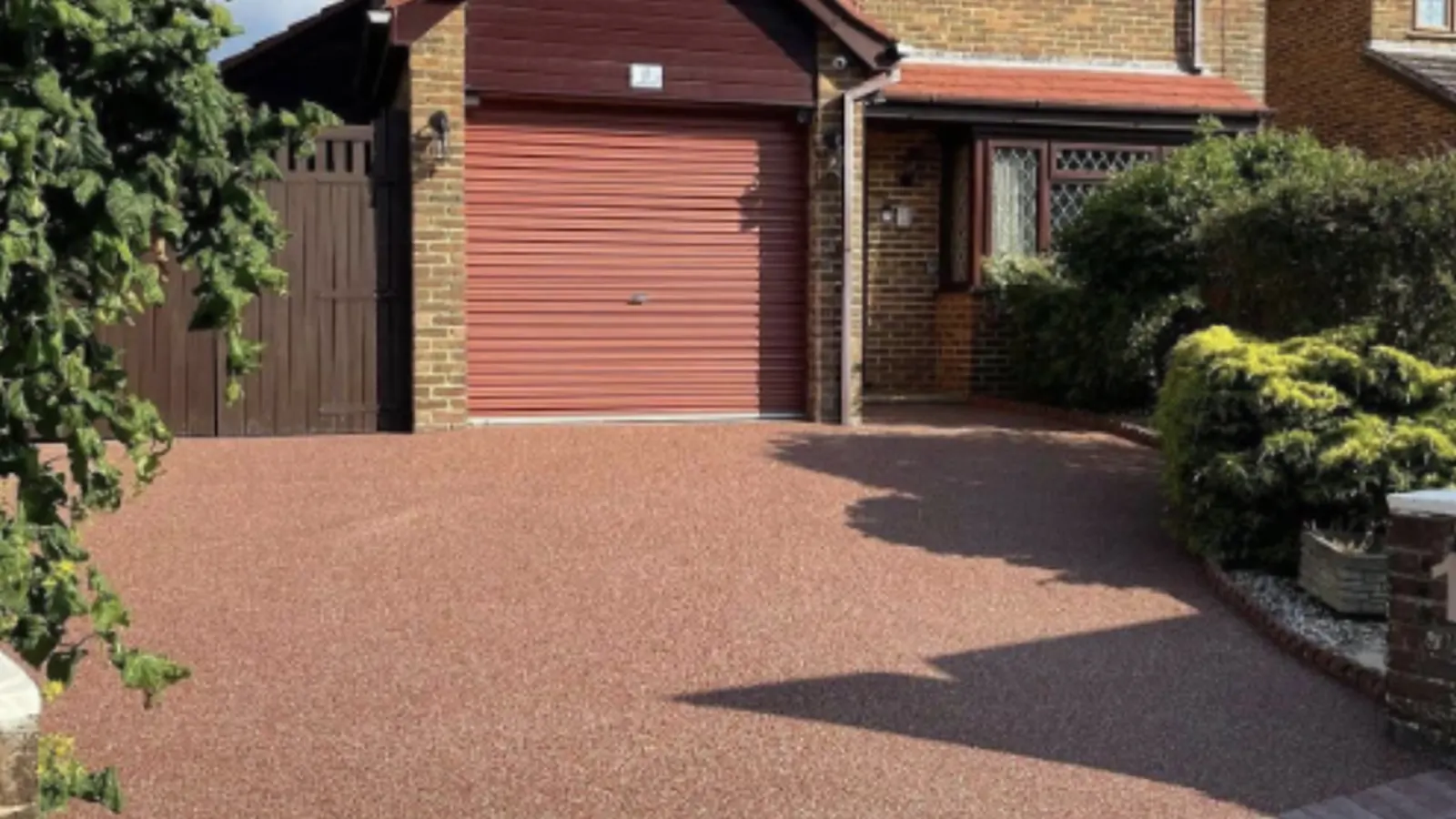
This is why the surface choice and the planning question are the same conversation. Our comparison of resin and tarmac driveways covers how each one sits against this rule, including the difference between resin bound, which is porous, and resin bonded, which is not.
Dropped kerbs are a separate process
Creating a new vehicle access across a footway means altering the highway, and that is licensed by the local highway authority rather than the planning department. The application is made to the council, the work is carried out by an approved contractor, and services under the footway sometimes have to be moved, which is the item that surprises people on cost.
On a classified road, forming a new access can also require planning permission in its own right. Where you are widening an existing dropped kerb rather than creating one, the highway licence still applies.
The other exceptions
- Listed buildings. Listed building consent is likely to be needed, and permitted development rights do not help.
- Conservation areas. Permitted development rights are often restricted, and surfacing materials can be controlled.
- Article 4 directions. These remove permitted development rights for specified works in a defined area, and they vary street by street.
- Flats and maisonettes. Permitted development rights for householders do not apply in the same way.
- New build estates. Planning conditions or covenants on the original consent frequently restrict what you can do to the frontage regardless of national rules.
That last one is worth checking on any property built in the last twenty years, because the restriction sits in the deeds or the original planning conditions rather than in the general rules.
How to check your own property
Search your address on your local council planning portal for any article 4 direction or conditions attached to the original consent, and check your title deeds for covenants. If you are in a conservation area the council website will say so. Ten minutes here avoids the expensive version of the question later.
Planning permission and building regulations are frequently confused, and they are different systems with different triggers. Our guide to planning permission versus building regulations explains which applies when.
Before work starts
Confirm the surface is porous or the drainage is designed in, apply for the dropped kerb licence early because the timescales are set by the council rather than the contractor, and get the drainage arrangement written into the quote rather than assumed. Our driveways service starts with a free no obligation survey covering the existing base, the drainage and the access.