
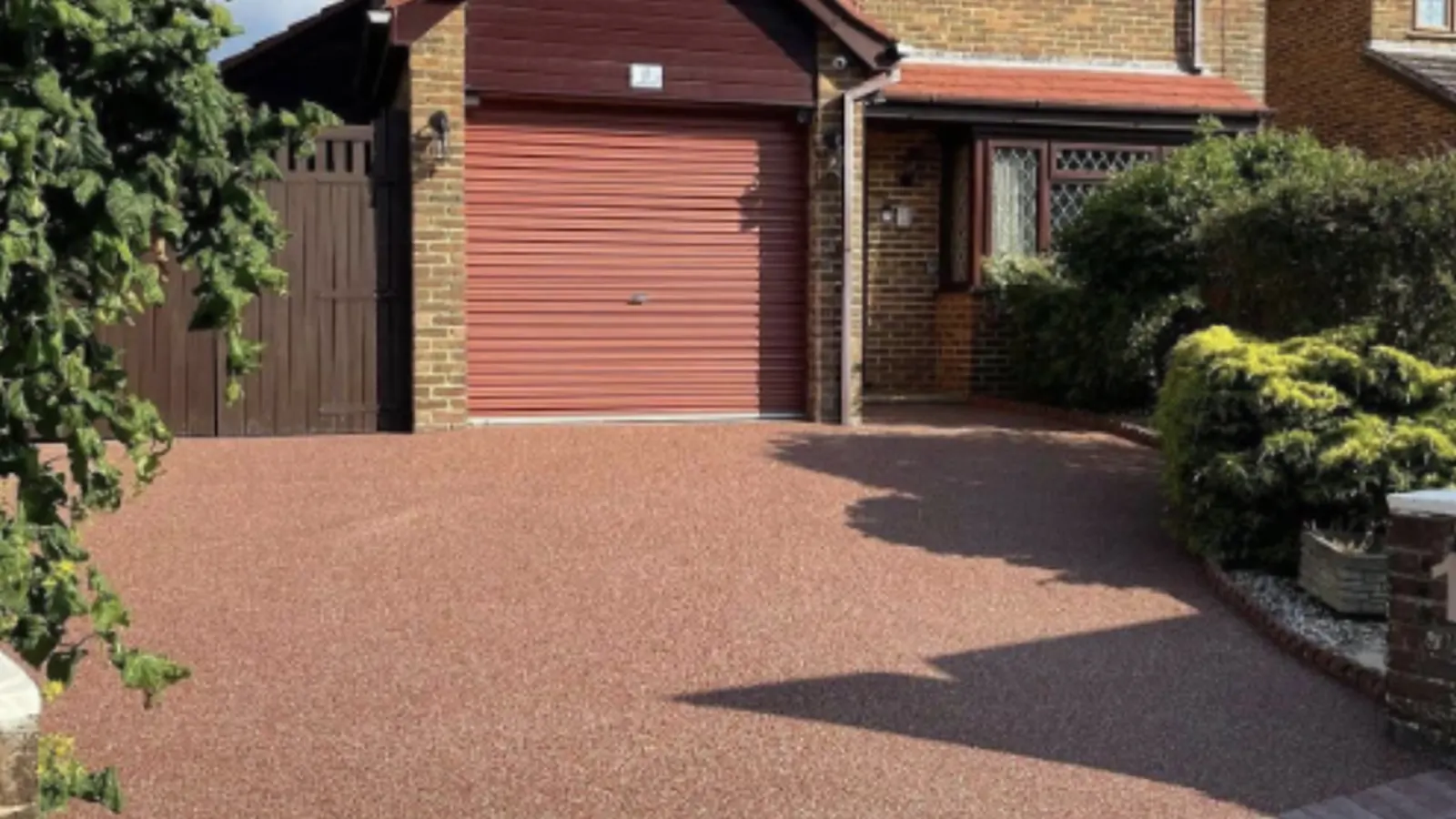
They are not the same kind of product
Tarmac is a surfacing material laid hot and compacted. Resin bound is a mix of aggregate and resin trowelled over an existing solid base, usually tarmac or concrete. That difference matters, because a resin bound driveway is normally a surface on top of a base, not a replacement for one.
Watch the terminology. Resin bound mixes the stone through the resin and is porous. Resin bonded scatters stone onto a resin layer and is not porous. They look similar in photographs and behave completely differently for drainage.
Drainage, and why it often decides the question
Surfacing more than five square metres of a front garden with an impermeable material requires planning permission unless the water is directed to a permeable area within the property. Porous surfaces avoid that requirement.
Resin bound is porous. Standard tarmac is not, although permeable tarmac exists. In practice this means a tarmac front driveway often needs a drainage solution designed in, while a resin bound one usually does not. Our guide to driveway planning permission covers the rules in full.
How each one performs
Appearance
Resin bound comes in a wide range of aggregate colours and gives a smooth, seamless finish with no loose stone. Tarmac is black, and stays black. If appearance is driving the decision, resin usually wins it.
Durability
Both last well on a sound base. Tarmac can soften in sustained heat and is more prone to rutting under a heavy vehicle parked in the same spot. Resin bound is more rigid, and where the base moves it tends to crack rather than deform.
Maintenance
Resin bound needs occasional washing and weeding at the edges, and moss can establish in a shaded, damp driveway. Tarmac benefits from resealing over time and shows repairs and patches more obviously.
Repairs
Tarmac patches easily but the patch is visible. Resin bound can be repaired but colour matching an aged surface is difficult, so a repair often shows too.
Cost
Tarmac is generally the lower cost per square metre. Resin bound sits higher, and higher again if the existing base needs replacing before the resin goes down. Neither price can be given meaningfully without seeing the site, because what is under the current driveway is the variable that matters.
Which suits which situation
- Sound existing tarmac or concrete you want to smarten up. Resin bound is doing what it is designed for.
- A long or large driveway on a budget. Tarmac covers area cost effectively.
- A front garden with no drainage provision. Porous resin bound avoids the planning problem.
- Heavy vehicles or regular commercial use. Tarmac laid to the right depth handles load well.
- Deeply shaded, permanently damp site. Both work, but expect more moss management on resin.
The part that decides the outcome
The base. A driveway fails from underneath far more often than from the surface. Excavation depth, sub base material and compaction, and edge restraint all matter more than which finish sits on top.
A quote that specifies the finish but not the excavation depth and sub base is not a quote for a driveway, it is a quote for a colour. Our driveways service covers both tarmac and resin bound, starting with a free no obligation survey of what is already there.