
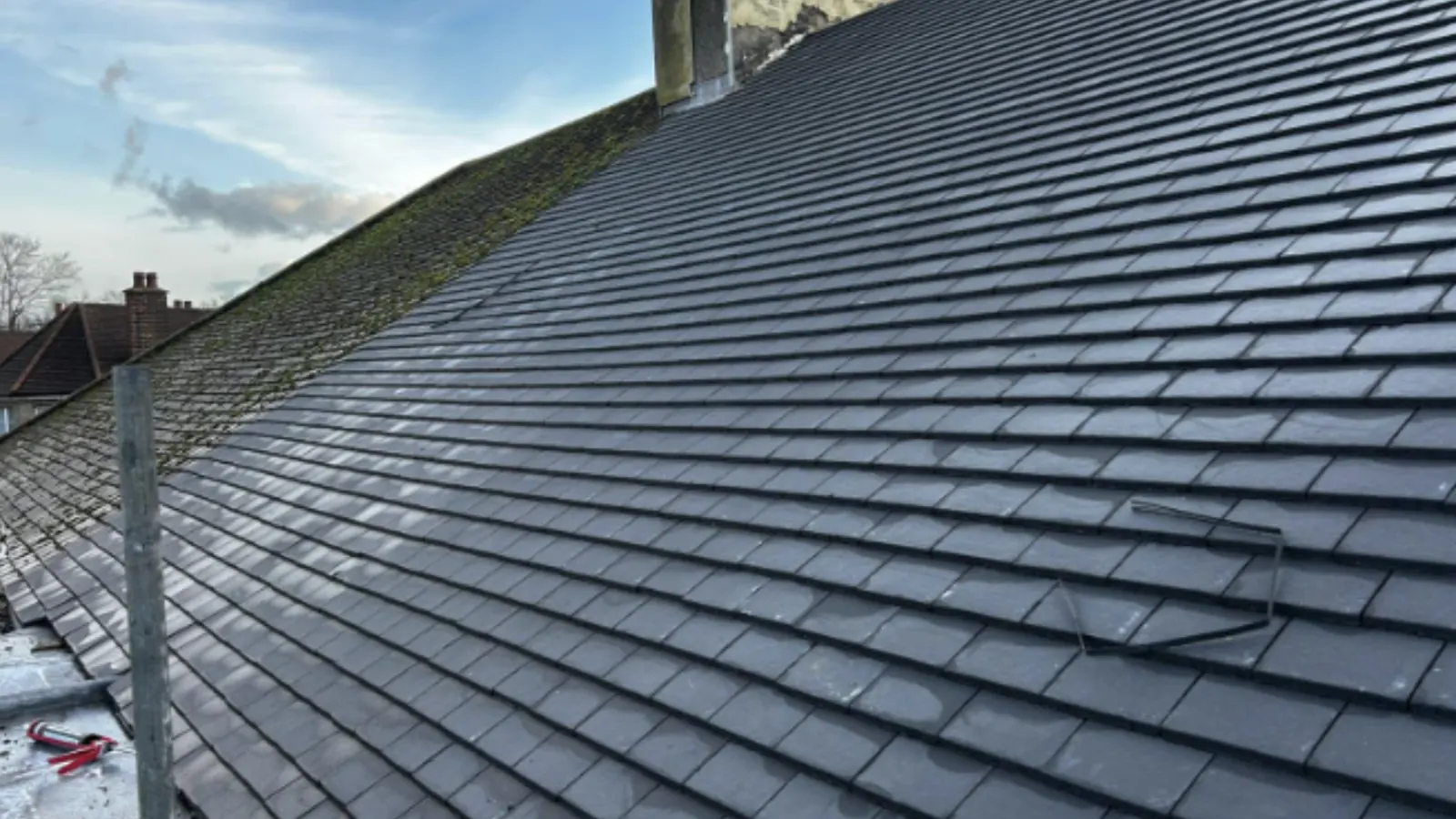
What a full re-roof actually covers
A full re-roof means stripping the roof back to the timbers and rebuilding the covering from there. A proper scope includes:
- Scaffolding, supplied, erected and struck, with any pavement licence the council requires
- Stripping the old covering, tiles or slates, battens and the old felt or membrane
- Inspecting the exposed timbers, because this is the one moment in decades when the whole structure can actually be seen
- New breathable membrane and new battens, fixed to current standards
- The new covering, laid with the right fixings for the tile and the exposure of the site
- Ridge, hip and valley work, now usually dry-fixed rather than mortared, which current standards require in most cases
- Flashings around chimneys and abutments, renewed rather than reused where they are tired
- Ventilation, built into the ridge or eaves so the roof space can breathe
- Waste removal, which for a whole roof is measured in tonnes, not bags
What should be on the quote
Every item above should appear as a line on a written quote, plus the tile or slate specification by name, the membrane specification, and a provisional rate for timber repairs. That last one matters: nobody can see the condition of every batten and rafter until the roof is stripped, so an honest quote states the rate for replacing timber if it is needed, rather than pretending it will not be.
The commonest cause of a re-roof going over budget is not the roofer being wrong about the tiles. It is timber condition being discovered mid-job with no rate agreed in advance for dealing with it.
How long it takes
A typical three-bed semi runs about a week to ten days on the roof itself, plus scaffold up before and down after. Weather moves this: a stripped roof is only ever left overnight with the membrane on and secure. Larger roofs, complicated hips and valleys, or matching reclaimed materials all add time, and the programme should be written into the quote.
What is usually not included
Unless the quote says otherwise, expect these to be extras: rebuilding a leaning chimney stack, replacing fascias, soffits and guttering (often worth doing while the scaffold is up), upgrading loft insulation, and internal redecoration of any rooms affected by historic leaks. A good contractor will price the ones worth combining with the re-roof, because the scaffold is already paid for.
Do you need planning permission?
Usually not for like-for-like recovering. Conservation areas and listed buildings are the exceptions, where the covering material can be controlled. Building regulations do apply when a roof is substantially re-covered, which brings insulation requirements with it. Our guide to planning permission vs building regulations explains the difference.
Is it worth doing before selling?
Sometimes, and often not. A re-roof rarely raises a sale price by what it costs, but a failing roof reliably lowers offers by more than the repair would cost. We have written an honest answer in does a new roof add value to your home, and on telling the difference between a roof that needs replacing and one that needs repairing in does my roof need replacing.