
Before anything is quoted: the inspection
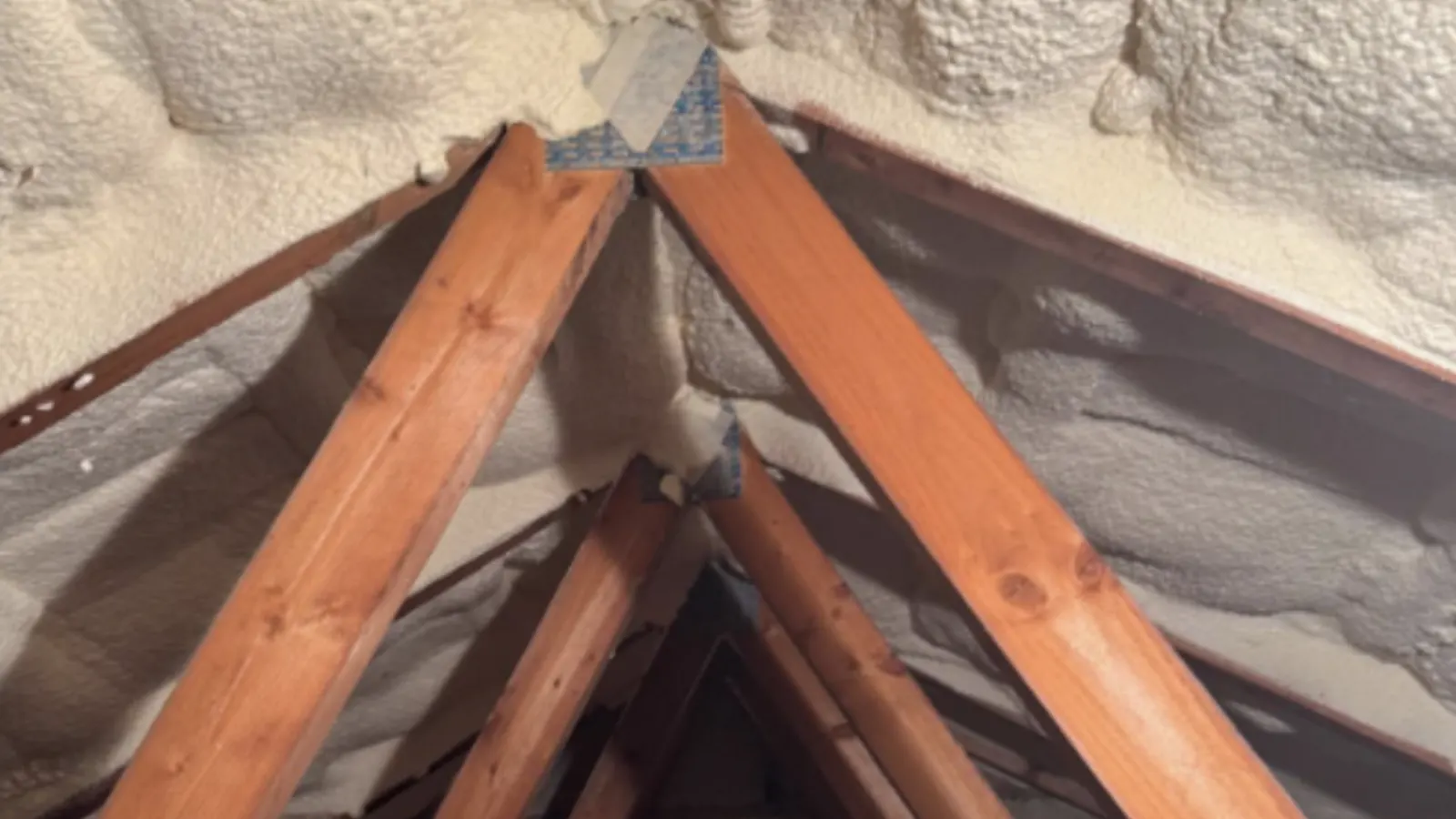
A proper quote starts with somebody in the loft establishing which foam type is present, whether it was applied to the underlay or directly to the covering, how thick it is, and how much of the roof it covers.
Those four facts decide the method and most of the price. A quote given over the phone, or from photographs, is a guess, and it is the usual reason a final invoice does not match the figure that won the job.
Step one: protection and access
Removal is dirty work. Before anything is cut, the route through the house is protected, the loft hatch is sealed off and dust control is set up. Anything stored in the loft has to come out first.
Step two: the foam comes off
The foam is cut back and stripped from the rafters, battens and underlay, largely by hand. This is the slow part.
Two things vary here. Open cell foam over an intact underlay usually separates reasonably cleanly. Closed cell foam bonded directly to the covering often cannot be separated without taking the covering with it, and where that is the case the honest position is that a section of roof needs re-covering rather than pretending otherwise.
Removal has to be complete. A thin residual layer left bonded to the timbers keeps the inspection problem exactly where it was, and that problem is the reason most people are having the work done.
Step three: the inspection nobody should skip
With the timbers exposed for the first time in years, this is the only opportunity to see the actual condition of the roof structure: the rafters, the battens, the wall plate and the underlay.
This is the step that gets left out of cheap quotes, and it is the one that carries most of the value. Photographs taken here are what a surveyor will want to see later.
Step four: repairs, if the inspection finds them
Where timbers have decayed, they are repaired or replaced. Where the underlay has perished or was damaged during removal, it is dealt with. Where battens are affected, they are renewed.
This is the point at which the type of firm matters. Timber repair is construction work, not roofing work, so a removal only contractor has to stop here.
Step five: ventilation and re-insulation
Taking the foam out leaves the roof uninsulated, so the job is not finished when the foam is in the skip. The roof space is reinstated as a ventilated cold roof, with the eaves airflow path reopened and vents added where needed, and the insulation goes back at ceiling level where it belongs.
Check whether this is inside your quote. It frequently is not.
Step six: the documentation pack
The job ends with the written record: what was found, what was removed, photographs of the exposed timbers, details of any repairs, and the specification of the new insulation and ventilation. Our guide to the paperwork lenders and surveyors want covers what should be in it and why assembling it afterwards does not work.
What to ask before you book
- Will you inspect the loft before quoting, and will the quote be itemised?
- Which foam type do I have, and is it bonded to the covering?
- Is the timber inspection included, and what happens if it finds damage?
- Is re-insulation and ventilation inside the price or extra?
- What documentation and photographs do I get at the end?
Our guide to removal costs explains why the answers to those questions are what actually move the price, and our spray foam removal service covers the whole sequence above, nationwide.